Semantic event store
FieldSync, Unifier AI, declared observability. Replace inference with declared relationships across Oracle Construction Cloud.
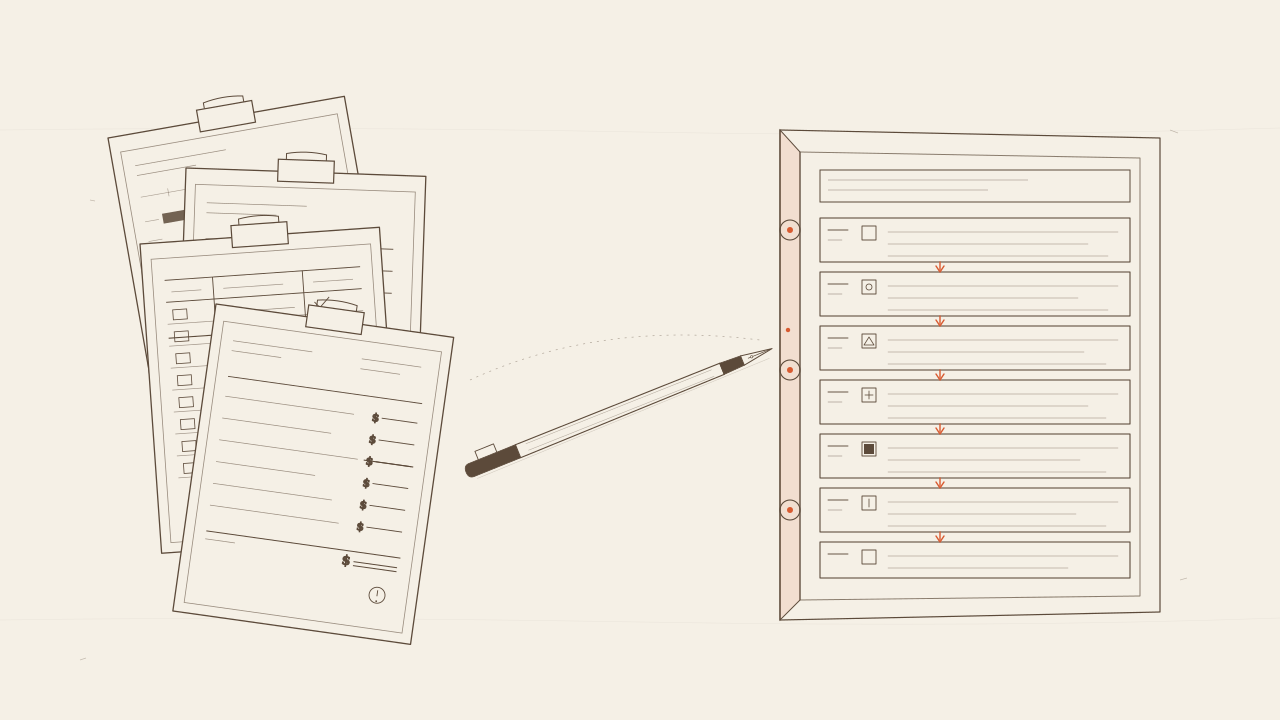
Oracle's Construction Cloud (Primavera, Unifier, Aconex, Textura) manages roughly a trillion dollars in active projects. It operates as four disconnected systems. The AI opportunity wasn't inference. It was making Oracle's 25-year customer configuration ontology queryable and governable. Declared relationships beat inferred ones at field scale.
Read the case What shipped, how it worked, the lines that land
What I shipped
FieldSync · 1st of 250+ at the Oracle Construction AI Hackathon
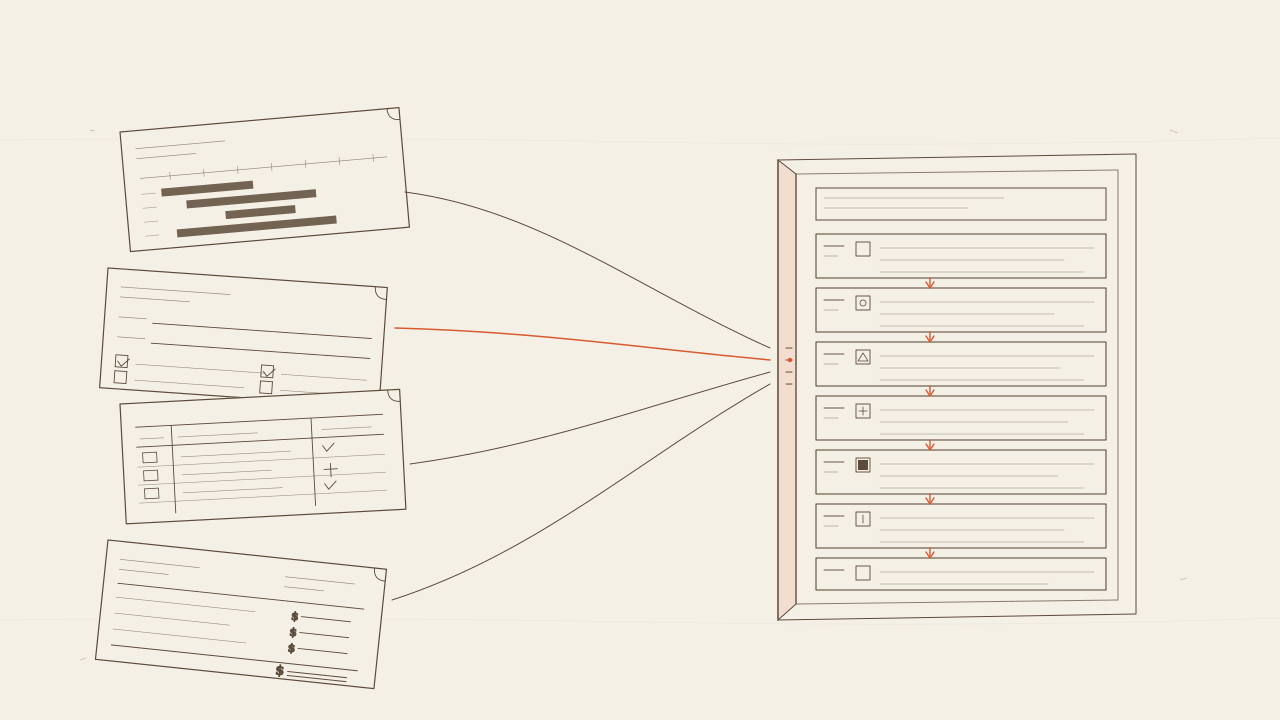
Led a cross-functional, four-time-zone team through a three-week sprint to design and validate FieldSync, a semantic truth-reconciliation layer across Oracle's Construction Cloud. Outcome: first place, presented to C-suite leadership. Demonstrated semantic architecture, executive communication, multi-stakeholder alignment, and an ontology-first AI thesis.
- Frame: superintendents losing roughly 2 hours daily reconciling conflicting data across platforms. Construction Project Managers making decisions 24 to 48 hours behind field reality.
- Move: a cross-system truth-reconciliation layer parameterized on Oracle's existing customer ontology, not a new model on top.
- Receipts: 1st of 250+ Oracle teams. C-suite presentation. Positioning for a $19B total addressable market expansion while protecting Construction Cloud revenue.
Unifier AI · AI Workflows
Prototype-driven AI workflows landed in Primavera Unifier 25.10 (Engtechnica). The pattern that worked: ship the configuration substrate first, then ship the AI behaviors on top.
- Workflow Summarization: four-panel architecture (Key Changes, Task Summary, Context Tracker, Smart Impact Preview) on an event-based spine, because system events were flooding the context window faster than human decisions did.
- Task Assist: declared-action surface inside workflows.
- The same pattern produced specs for Document Dossier, Semantic Field Auto-Tagging, User Group AI Role Profiles, and the Semantic Event Infrastructure business case.
AI Event & Observability program
Started the AI Event & Observability program inside the Architecting Unifier for the Future workstream. The load-bearing thesis: if you can't audit it, you can't govern it. Auditability was the upstream variable for adoption. Not the other way around.
- Designed observability schematics. Mapped what needed to be visible (tokens, round trips, HTTP requests, system events, model outputs).
- Typology insight: observability surfaces differ by AI interaction type. Deterministic, summarization, agentic, human-in-the-loop. Each gets its own schematic. The typology is the framework's structural bone.
- Authored the first draft of the AI Adoption Governance Framework, used to scope specs and legal review across three product squads.
- Adjacent ship: Business Case · Semantic Event Infrastructure for Oracle Unifier. Append-only, row-level-security-enforced event store turning Oracle's 25-year configuration ontology into a queryable, governable surface (~40% projected reduction in config-related escalations).
Craft: how it actually worked
FieldSync's pattern
Parameterized on Oracle's existing 25-year customer configuration ontology, not stacked on top of it. Every superintendent and Construction Project Manager is already telling Oracle the truth via their config. The AI's job is to honor that declared truth and reconcile across systems, not re-derive it via inference.
Workflow Summarization
A single summary collapses the decision surface. Four panels preserve it. Key Changes, Task Summary, Context Tracker, Smart Impact Preview. Each reads a different slice of an event-based spine.
Observability does not generalize
Deterministic, summarization, agentic, human-in-the-loop. Each AI interaction type gets its own schematic. There is no shared field set. The typology is the framework's structural bone.
One pattern, six surfaces
Each spec captured the substrate it sat on, the surfaces it exposed, the observability shape, and the eviction conditions. The same pattern drove Workflow Summarization, Task Assist, Document Dossier, Semantic Field Auto-Tagging, User Group AI Role Profiles, and the Semantic Event Infrastructure case.
The 25-year customer configuration ontology is the most valuable thing Oracle owns. Most AI strategies treat it as exhaust. The right one treats it as the asset.
See the proof Composition, primitives, first principles
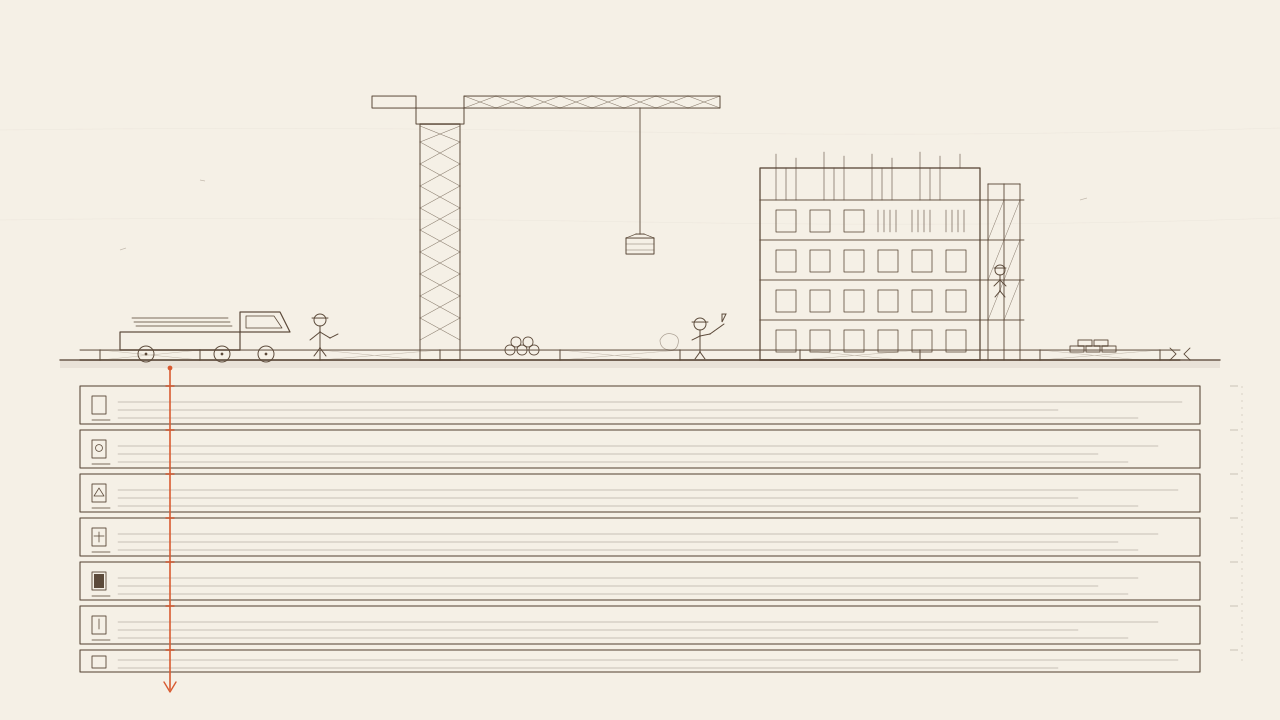
If you can't audit it, you can't govern it. If you can't govern it, you can't adopt it. Observability is upstream of adoption, not downstream of it.
Primitives: the reusable architecture
The semantic event store
Append-only. Row-level-security-enforced. Typed against the customer ontology. Replayable. Turns 25 years of accumulated configuration into a queryable, governable surface. The store is the upstream substrate. Every AI behavior is a downstream consumer.
The configuration substrate pattern
Ship the substrate first. Ship the behaviors second. AI features bolted on lose because they treat configuration as exhaust. The substrate-first pattern treats configuration as the asset.
Auditability as the upstream variable
The load-bearing thesis: if you can't audit it, you can't govern it. If you can't govern it, you can't adopt it. Observability comes before launch, not after.
How this composes
- Procore Same vertical-flex move at the API boundary layer.
- Clause Cryptographic provenance on top of typed events.
- Amazon Refusal as a typed event in the store.
- Declaration The store is the Notary surface at platform scale.
Don't ship AI on top of configuration. Ship the configuration substrate first. Then ship the AI as a consumer of that substrate.
First principles
Inferred relationships are a liability at field scale
A wrong inference about a single project costs a single decision. A wrong inference at trillion-dollar-portfolio scale costs a class of decisions across thousands of projects. Inference cost compounds. Declaration cost is linear.
Customer configuration is the asset, not the exhaust
The 25-year configuration ontology is what Oracle has that no one else can replicate. AI that overrides it loses. AI that operates inside it wins. This is the load-bearing strategic claim.
Why this matters
Agent tool-use at protocol scale needs the same move. Don't infer what the tool returned. Declare it as a typed, replayable, governable event. The semantic event store is the substrate Anthropic's interpretability and oversight work eventually needs.
Workflow events should be facts, not summaries.