Still Point
A poem to myself, borrowing from Atwood and Eliot, in case I forget myself in the future.
My high school English teacher introduced me to a poem called "You Begin" by Margaret Atwood.
I think that poem was the beginning point for me. It astounds me how much I reference it over a decade later.
The second poem that has stuck with me is T.S. Eliot's "Burnt Norton," with its meditation on "the still point of the turning world," that place where past and future gather, where the dance is.
So I wrote a poem to myself, borrowing from both, in case I forget myself in the future.
Still Point
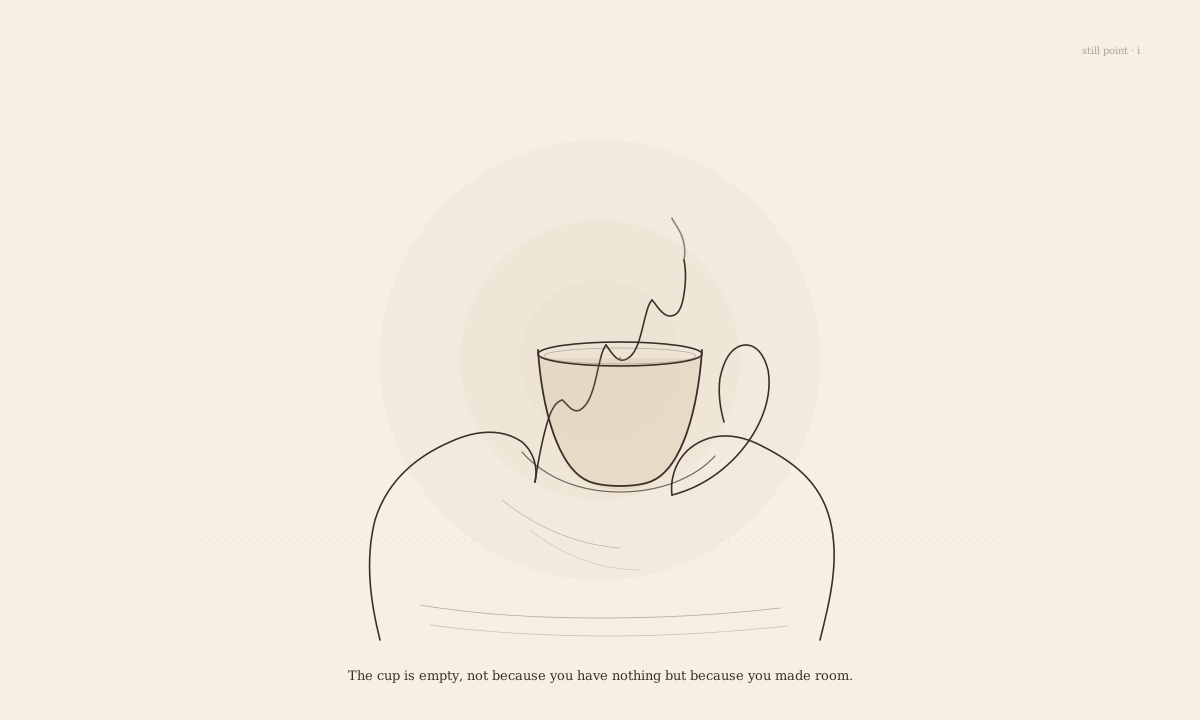
You begin this way: this is your mind, this is a cup. The cup is empty, not because you have nothing but because you made room.
This is your attention, it moves like water toward the other person. This is their mouth, these are their words, that is the shape of how they think. You are inside it now.
This is an eye. The eye affords light. Light affords the path. The path affords the door. The door affords the room you're standing in. Each thing is a hinge to the next thing.
Outside the conversation is the pattern, green because it is alive, and beyond that other conversations, other patterns, and they are the same shape wearing different clothes.
This is the world, which is fuller and more connective than I have said. You are right to empty yourself that way, to pour out what you knew so the cup can hold what you don't: the cup fills.
Once you have learned to ask you will learn there are more questions than you can ever finish.
"Once you have learned these words you will learn that there are more words than you can ever learn."
The question floats above the answer like a hand over a hand. The question anchors and scaffolds, their knowing is a warm stone you hold between two listenings.
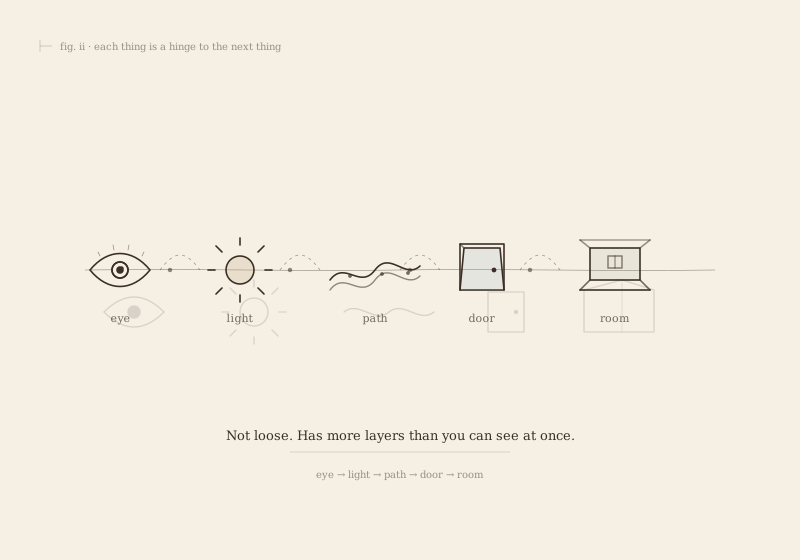
This is your vessel, that is their vessel, this is the chain, it is long. Not loose. Has more layers than you can see at once.
It begins with not knowing, it moves through their knowing, it ends with what neither of you knew until the cup and the question and the chain made it visible.
This is your vessel, this is their vessel. They were always one and the same.
This is your hand. Open. This is what you will come back to: the shape that receives.
Companion essay: Everyone Has a Plane (to catch) →